
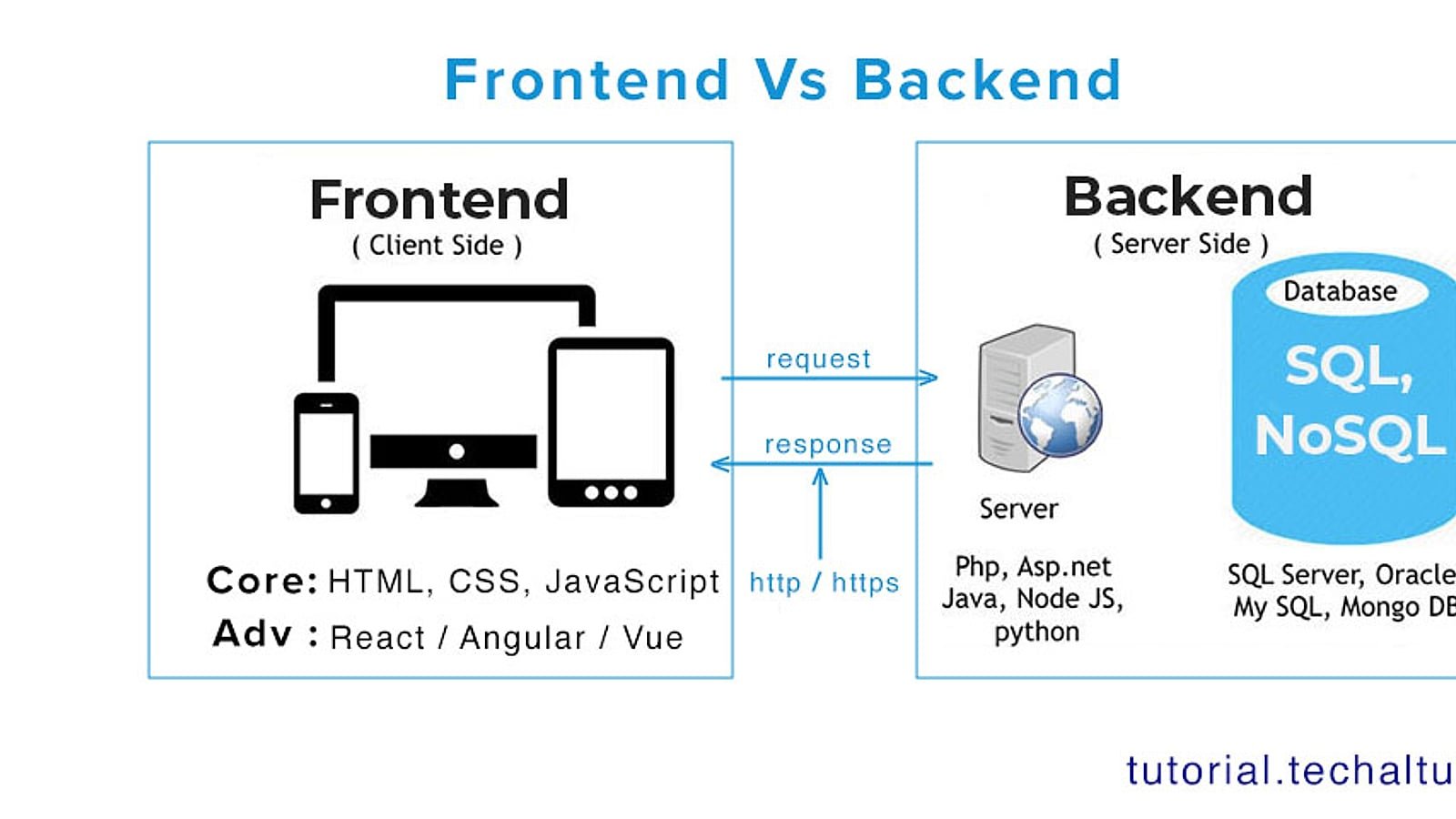
When building modern web applications, understanding the division of labor between the client side and the server side is essential. Frontend and backend are two critical aspects of any application development lifecycle, each handling vastly different responsibilities to create a cohesive digital experience. Front end and back end – Wikipedia
While the user-facing portion focuses on visual presentation and immediate interactivity, the underlying architecture handles data processing, storage, and business logic. Together, front end IT and back end infrastructure work together to deliver complete software solutions.
Examining these two distinct layers reveals how user requests travel through a web application, transforming simple button clicks into complex database transactions and dynamic visual updates.
Expanded Definition
Frontend and backend are two critical aspects of any application development. Without the frontend, users would have no way to visually navigate or input information into a system. Without the backend, applications would lack the ability to save user data, authenticate accounts, or perform persistent calculations.
The frontend is what your users see, including visual elements like buttons, checkboxes, graphics, and text messages. These components dictate the look, feel, and immediate usability of a website or mobile application, existing entirely within the user’s local web browser or device.
Conversely, the backend is the data and infrastructure that make your application work, storing and processing application data. This hidden layer operates on remote servers, executing business rules, managing database queries, and ensuring that information securely reaches the correct destination.
Ultimately, front end IT and back end infrastructure work together to deliver complete software solutions. Bridging the visual layer with the data layer requires clear communication protocols, ensuring that user actions on a screen accurately trigger updates within the server environment.
Examples and Use Cases
The frontend refers to the graphical user interface (GUI) that users directly interact with, such as navigation menus, design elements, buttons, images, and graphs. Every color scheme, typography choice, and responsive layout adjustment belongs to this client-facing domain.
In technical terms, a page or screen with UI components is called a document object model (DOM). The DOM represents the page so that programs can change the document structure, style, and content dynamically in response to user actions.
Three primary computer languages affect user interaction on the frontend: HTML, CSS, and JavaScript. These foundational technologies divide responsibilities cleanly between structure, presentation, and behavior within the browser.
HTML defines frontend structure and DOM elements, CSS defines the visual style, and JavaScript adds dynamic functionality. Together, this trio transforms raw code into interactive web pages that adapt smoothly to different screen sizes and user inputs.
Domain and Governance Relevance
JavaScript can trigger changes on a page, display new information, and handle fundamental user interactions like validating an email address before submission. This immediate feedback loop improves user experience by catching simple errors locally without requiring a full page reload.
The frontend passes more complex requests to the backend for heavy lifting and data retrieval. When a user submits a filled form or requests a large dataset, the client-side code packages the input and sends it across the network to be processed by server-side systems.
Developers frequently ask: is react front end or backend? React is a JavaScript library specifically designed for building user interfaces on the frontend, allowing developers to create reusable components that manage their own state.
Front end as a service (FEaaS) allows teams to decouple UI layers from back end infrastructure. By utilizing cloud-hosted frontend management tools, organizations can streamline design workflows and deploy user interfaces independently from core application servers.
Security Implications
The backend is sometimes called the server side and manages overall web application functionality. It operates away from the client device, shielding critical system operations from direct manipulation by end users.
When a user interacts with the frontend, the interaction sends a request to the backend in HTTP format. These requests carry parameters, authentication tokens, and user inputs across the network to the server.
The backend processes the incoming request and returns a corresponding response. This response might include JSON data, HTML snippets, or error messages indicating whether the requested operation succeeded.
Back end infrastructure handles sensitive business logic, database queries, and security authorization away from the user’s browser. By keeping credentials, database connection strings, and proprietary algorithms on the server, applications prevent unauthorized access and data breaches.
Standards & Framework Alignment
Frontend development aligns with web standards managed by organizations like the W3C for HTML and CSS. Adhering to these specifications guarantees that web pages render consistently across different browsers and operating systems.
Backend development adheres to API protocols, database standards, and secure communication protocols like HTTPS. These technical guidelines ensure that data transmission remains encrypted and that server endpoints accept structured, predictable requests.
Modern architecture separates concerns to ensure maintainable front end IT and robust back end infrastructure. By drawing a sharp line between presentation logic and data processing, engineering teams can scale, test, and update each layer independently.
Framework alignment helps developers build scalable applications that clearly separate user interface rendering from server-side processing. Standardized design patterns reduce technical debt and make it easier for specialized developers to collaborate on enterprise-grade software products.
Frequently Asked Questions
What is the difference between frontend and backend development?
Frontend development focuses on the user-facing elements of a website or application that users interact with directly, such as buttons, layouts, and navigation. Backend development handles the behind-the-scenes logic, database management, server configuration, and application programming interfaces (APIs) that power the frontend.
What programming languages are used for frontend development?
Frontend developers primarily use HTML to structure content, CSS to style the visual presentation, and JavaScript to add interactivity and dynamic behavior. Popular JavaScript frameworks and libraries like React, Angular, and Vue.js are also widely utilized to build complex user interfaces.
What technologies are commonly used in backend development?
Backend development relies on server-side programming languages such as Python, Node.js, Java, Ruby, and PHP. These languages work alongside database management systems like MySQL, PostgreSQL, MongoDB, and Redis to store and retrieve data securely.
Can a software developer do both frontend and backend?
Yes, professionals who specialize in both domains are known as full-stack developers. They possess the skills to build the complete architecture of a web application, managing everything from the client-side user experience to server-side database integration.
How do frontend and backend developers communicate?
Frontend and backend developers typically communicate using Application Programming Interfaces (APIs), most commonly RESTful APIs or GraphQL. The frontend sends HTTP requests to the backend server, which processes the request, interacts with the database, and returns data in a structured format like JSON.
Which pays more, frontend or backend development?
Salary comparisons often show that backend developers earn slightly higher average salaries than frontend developers due to the complexity of server management, data security, and system architecture. However, compensation varies significantly based on geographic location, years of experience, and tech stack proficiency.