
If you want to attract more customers and increase conversions, understanding how to build a sales funnel is essential. A sales funnel guides potential customers through a structured journey, from discovering your business to making a purchase. Without a well-planned funnel, businesses often struggle to turn website visitors into paying customers.
Fortunately, learning how to build a sales funnel is not as complicated as it may seem. By following the right steps, you can create a system that consistently generates leads, nurtures prospects, and drives sales. In this guide, you will learn the key stages of a sales funnel, why it matters, and how to create one that delivers results.
What Is a Sales Funnel?
Before exploring how to build a sales funnel, it is important to understand what a sales funnel actually is.
A sales funnel is a marketing framework that represents the customer journey. It starts when a potential customer first becomes aware of your brand and ends when they make a purchase. In many cases, the funnel continues even after the sale to encourage repeat business and customer loyalty.
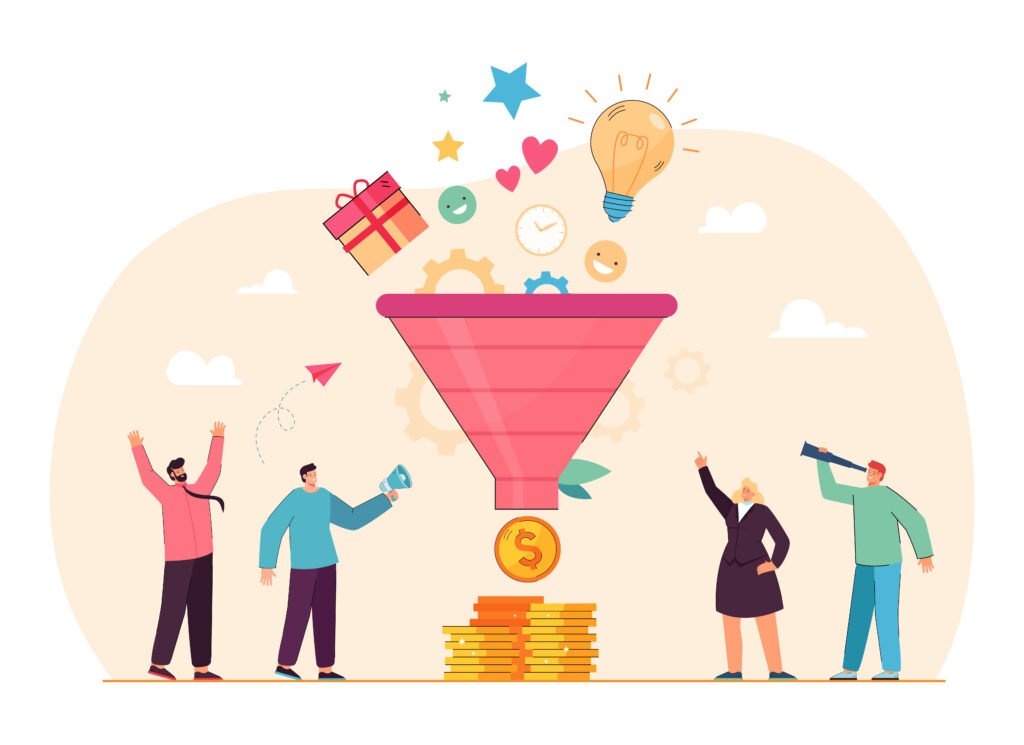
The funnel is called a “funnel” because many people enter at the top, but only a portion move through each stage and become customers.
Why Is a Sales Funnel Important?
Understanding how to build a sales funnel can significantly improve your marketing performance. Instead of targeting everyone with the same message, a sales funnel allows you to provide the right content at the right time.
Some key benefits include:
- Improved lead generation
- Higher conversion rates
- Better customer engagement
- More effective marketing campaigns
- Increased revenue opportunities
As a result, businesses can allocate their resources more efficiently and achieve better outcomes.
The Main Stages of a Sales Funnel
To understand how to build a sales funnel, you must first learn about its key stages.
| Sales Funnel Stage | Purpose | Example Content |
|---|---|---|
| Awareness | Attract potential customers | Blog posts, social media content |
| Interest | Build engagement and trust | Guides, videos, webinars |
| Consideration | Help prospects evaluate solutions | Case studies, comparisons |
| Conversion | Encourage purchases | Product pages, special offers |
| Retention | Keep customers engaged | Email campaigns, loyalty programs |
Each stage plays a vital role in moving prospects closer to becoming customers.
How to Build a Sales Funnel Step by Step
1. Identify Your Target Audience
The first step in how to build a sales funnel is understanding who your ideal customers are.
Start by researching:
- Demographics
- Interests
- Pain points
- Buying behavior
- Goals and challenges
When you know your audience, you can create marketing messages that resonate with their needs.
2.Create Awareness
Once you know your audience, the next step in how to build a sales funnel is attracting potential customers.
There are several ways to increase awareness:
- Search engine optimization (SEO)
- Content marketing
- Social media marketing
- Paid advertising
- Influencer partnerships
For example, publishing informative blog posts can help your website rank in search engines while also educating potential customers.
3. Develop Valuable Content
Content is one of the most important elements when learning how to build a sales funnel.
Different types of content support different funnel stages. Therefore, you should create content that addresses customer needs throughout their journey.
Examples include:
- Educational blog posts
- Downloadable guides
- Videos
- Webinars
- Email newsletters
As prospects consume your content, they begin to trust your brand and move further into the funnel.
4. Capture Leads
The next step in how to build a sales funnel is collecting contact information from interested visitors.
Lead capture methods include:
- Contact forms
- Newsletter signups
- Free consultations
- Downloadable resources
- Webinar registrations
In exchange for valuable content, visitors are often willing to share their email addresses and other information.
5. Nurture Leads Through Email Marketing
After capturing leads, you must continue building relationships.
Email marketing is one of the most effective strategies for how to build a sales funnel because it allows you to communicate directly with prospects.
Your email sequence may include:
- Welcome emails
- Educational content
- Success stories
- Product information
- Promotional offers
Consequently, prospects remain engaged and are more likely to convert.
6. Build Trust and Credibility

Trust is a critical factor when deciding how to build a sales funnel that converts effectively.
You can build trust by showcasing:
- Customer testimonials
- Case studies
- Reviews
- Industry certifications
- Success stories
As a result, prospects feel more confident about doing business with your company.
7. Create Compelling Offers
A strong offer encourages prospects to take action.
When considering how to build a sales funnel, your offer should clearly communicate value while reducing risk.
Examples include:
- Free trials
- Discounts
- Limited-time promotions
- Free consultations
- Product demonstrations
Additionally, clear calls-to-action can help guide users toward conversion.
8. Optimize Landing Pages
Landing pages play a significant role in how to build a sales funnel successfully.
An effective landing page should include:
- A clear headline
- Strong benefits
- Customer testimonials
- A simple form
- A compelling call-to-action
Furthermore, minimizing distractions can improve conversion rates.
9. Measure Funnel Performance
Monitoring performance is another essential part of how to build a sales funnel.
Track important metrics such as:
| Metric | Why It Matters |
| Traffic | Measures awareness efforts |
| Conversion Rate | Tracks sales effectiveness |
| Lead Generation | Evaluates lead capture success |
| Email Open Rate | Measures engagement |
| Customer Retention | Indicates long-term value |
By analyzing these metrics, you can identify opportunities for improvement.
10. Continuously Improve Your Funnel
The final step in how to build a sales funnel is ongoing optimization.
Customer behavior changes over time. Therefore, you should regularly test:
- Headlines
- Calls-to-action
- Landing pages
- Email campaigns
- Offer structures
Small improvements can often produce significant results.
Common Sales Funnel Mistakes to Avoid
Even after learning how to build a sales funnel, many businesses make avoidable mistakes.
Some common errors include:
Ignoring Audience Research
Without understanding your audience, your funnel may fail to connect with potential customers.
Weak Calls-to-Action
If visitors are unsure what to do next, they may leave your website without converting.
Lack of Follow-Up
Many businesses lose leads because they do not nurture them consistently.
Poor Mobile Experience
Since many users browse on mobile devices, your funnel must be mobile-friendly.
Failing to Track Data
Without performance tracking, it becomes difficult to improve your results.
Benefits of a Well-Designed Sales Funnel
Businesses that understand how to build a sales funnel often experience several advantages.
These include:
- Higher conversion rates
- Better lead quality
- Increased customer loyalty
- Improved marketing efficiency
- Greater revenue growth
Moreover, a structured funnel creates a smoother customer experience from start to finish.
Frequently Asked Questions (FAQs)
A sales funnel is a structured process that guides potential customers from initial awareness to making a purchase and becoming loyal customers.
Learning how to build a sales funnel helps businesses generate leads, improve conversion rates, and increase revenue more effectively.
The timeline varies depending on business goals, audience research, content creation, and marketing strategies. However, a basic funnel can often be developed within a few weeks.
Popular tools include CRM software, email marketing platforms, landing page builders, analytics tools, and marketing automation systems.
You can improve conversion rates by optimizing landing pages, creating stronger offers, improving calls-to-action, nurturing leads, and continuously testing funnel elements.
Conclusion
Learning how to build a sales funnel is one of the most valuable skills for business growth. A well-designed funnel helps attract visitors, generate leads, nurture relationships, and convert prospects into loyal customers.
By identifying your audience, creating valuable content, capturing leads, and optimizing every stage of the customer journey, you can build a sales funnel that delivers long-term success. Most importantly, continue testing and refining your funnel to ensure it remains effective as your business evolves.